From78 avatar

On judgments

Looking back at what I’ve posted and podcasted about recently, I see a theme of me now looking back on the young me and seeing him as rather judgmental. What’s interesting about this is that I now see myself then as judgmental, which is a judgment.

What should I make of catching myself judging a younger version of myself for being judgmental?

When I think about it right now, I see a fundamental difference. The way I remember it, the young me was very sure of his judgments. Additionally, the young me felt rather righteous and self-important.

I still judge (obviously). I can’t get divorced from making judgments all the time about everything.

However, I hope I’m much more prone to questioning my judgments and less quick to trust them. I also hope I don’t take myself as seriously as I did in my younger years, because it seems to me that taking oneself seriously breeds feelings of self-righteousness and self-importance, which in turn lead to impulsive, often regretful actions.

Past me who lives in my head

Yesterday, I saw someone wearing a baggy black sweater and distressed jeans. This put my brain gremlins to work. They pulled several files into my consciousness.

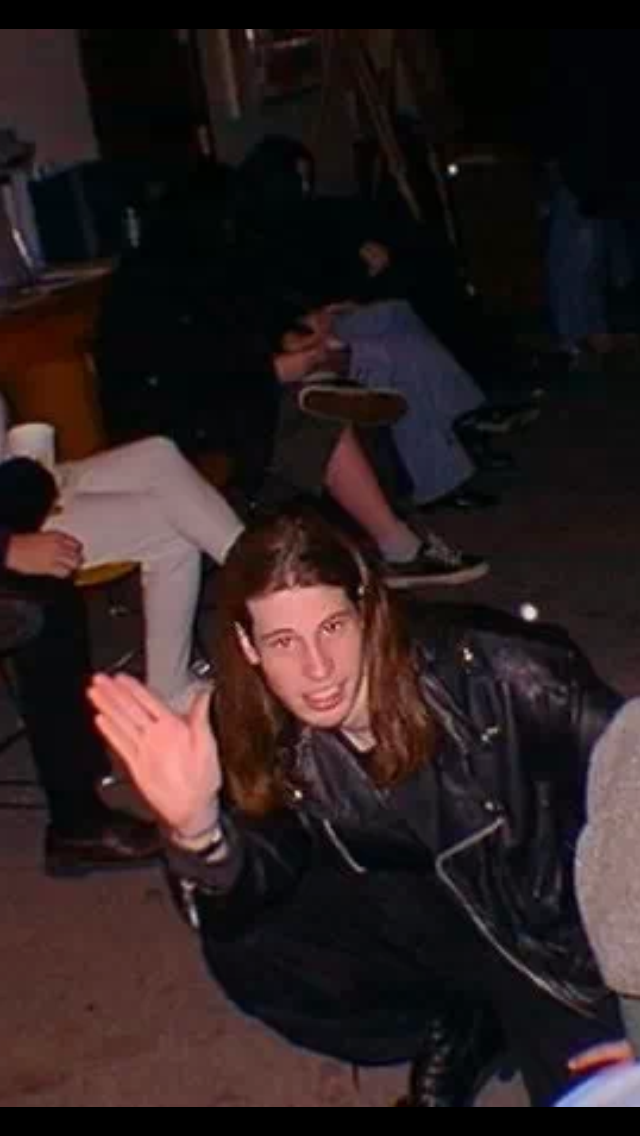
The files contained many memories of being with friends at a small café and/or at Denny’s in the mid-1990s. In these memories, it was winter, and indoor spaces were filled with cigarette smoke. (This was when people could still smoke indoors.) Lots of people were dressed in a style that was similar to the person I had just seen. This was the height of the grunge era, and many people dressed in baggy sweaters, flannel shirts, jeans, and well-worn footwear to show how aligned they were with the fashion zeitgeist of the time.

The memory fades, and I start to think about it.

I notice a few things:

I notice that at this point in my life, when I look back to the 1990s, I see a lot of struggle. I was struggling. Many of the other people around me were struggling as well. We were young and had not established ourselves professionally or economically. We were living our lives in a space between our families of origin and the families we would create, a liminal zone where friendships and community serve as a kind of family structure, even though there are no ties of marriage or genetics binding people together. We didn’t know much about ourselves or the world we lived in. (At the time, many of the people I hung out with and I would not have admitted to this. We were prone to presenting ourselves as people who did know who and what we were because we were authentic and had yet to be corrupted by an accumulation of experiences that would beat us down and blunt our young jagged edges.)

As I savored these associations, a new thought came to me: I was struggling, and those around me were struggling, but we were struggling together. That shared struggle is something I long for as I look back on it.

Past me who lives in my perks up.

“You think struggle is desirable? You think my struggle is quaint? Fuck you!” The version of past me that lives in my head says to me now. Past me, the one who lives in my head, wants to punch me now in the face. Hard.

“Hold up,” I say to past me. “I know… well… I remember how hard this feels for you. I don’t miss that feeling. You probably won’t believe me because you feel so alone, isolated, and misunderstood, but many people around you are going through their own version of this. You hang out with them often. Even though you can’t see it when you’re going through the struggle, there is a collective aspect to this, along with the singular aspect that is yours alone.”

Past me makes an obscene gesture. He wants none of what I’m saying.
Not enough time

Every day, there is so much stuff (books, podcasts, long-form articles and blog posts, films, audiobooks, comics, music, games, tv shows, etc.) I want to spend time absorbing. Every. Day.

But time and my attention are not unlimited. Both are finite.

So I’ve got to make choices about what gets the time and attention I don’t need to invest in work or parenting… I’m going to assume you (whoever you are) are experiencing your own version of this, and that you, too, are frustrated by it. This post is my attempt to express solidarity with you.

Blogs as open notepads

Writing on disquiet, Marc Weidenbaum says,

The key thing is that blogging is not about final drafts. Blogging is as much a public notepad as social media is at its best (to be clear, most of social media is social media at its worst). It’s not a magazine; it’s a journal.

Earlier in the same post, Marc also had this to say about an RSS feed being a key part of a blog because RSS gives the reader a different experience than going to the blog-as-a-website.

A certain breed of email newsletter counts [as a kind of blog], as well, when the issues double as URL-specific posts, and — and this is key — there is an RSS feed to access them. I remain convinced that an RSS feed is an essential component of a blog — that, alternately, to require people to repeatedly visit your website of their own volition, and in the process for them to recall precisely where they left off reading the last time they were there, is simply too much to ask of a reader. It was too much to ask in the late 1990s, and in our cellphone-mediated, notification-riddled present, it is all the more so. RSS brings the writing to the reader, and in some ways isn’t that distinct from email.

I’ve been thinking back to what early blogging and podcasting were like lately. Reading Marc’s post reinforced something that had crossed my mind: a return to an older style of blogging (and podcasting?) could be a good idea. Certainly something to try.


P.S.

This is a re-post of an old post from a prior blog. I’m slowly migrating those posts over to From78.

Phantom obligations

Many people have been posting about an essay by Terry Godier that articulates something he calls “phantom obligation”. I’ve read it twice and have been thinking about the concept much more than unexpected.

However, the way I’ve been thinking about it has more to do with how I feel a version of phantom obligation in relation to small household tasks, and within significant relationships with other people and institutions.

It’s nice to have phantom obligation as a signifier to think with, to name what I might be feeling after I feel it…

The rendering of the concept into words does not cure my tendency to experience phantom obligation, but it does help me retroactively interpret that experience in a way that has the affect of reducing the pressure of the imagined/assumed/felt sense of obligation.

I think this is a good thing.

Hello Daystar 003

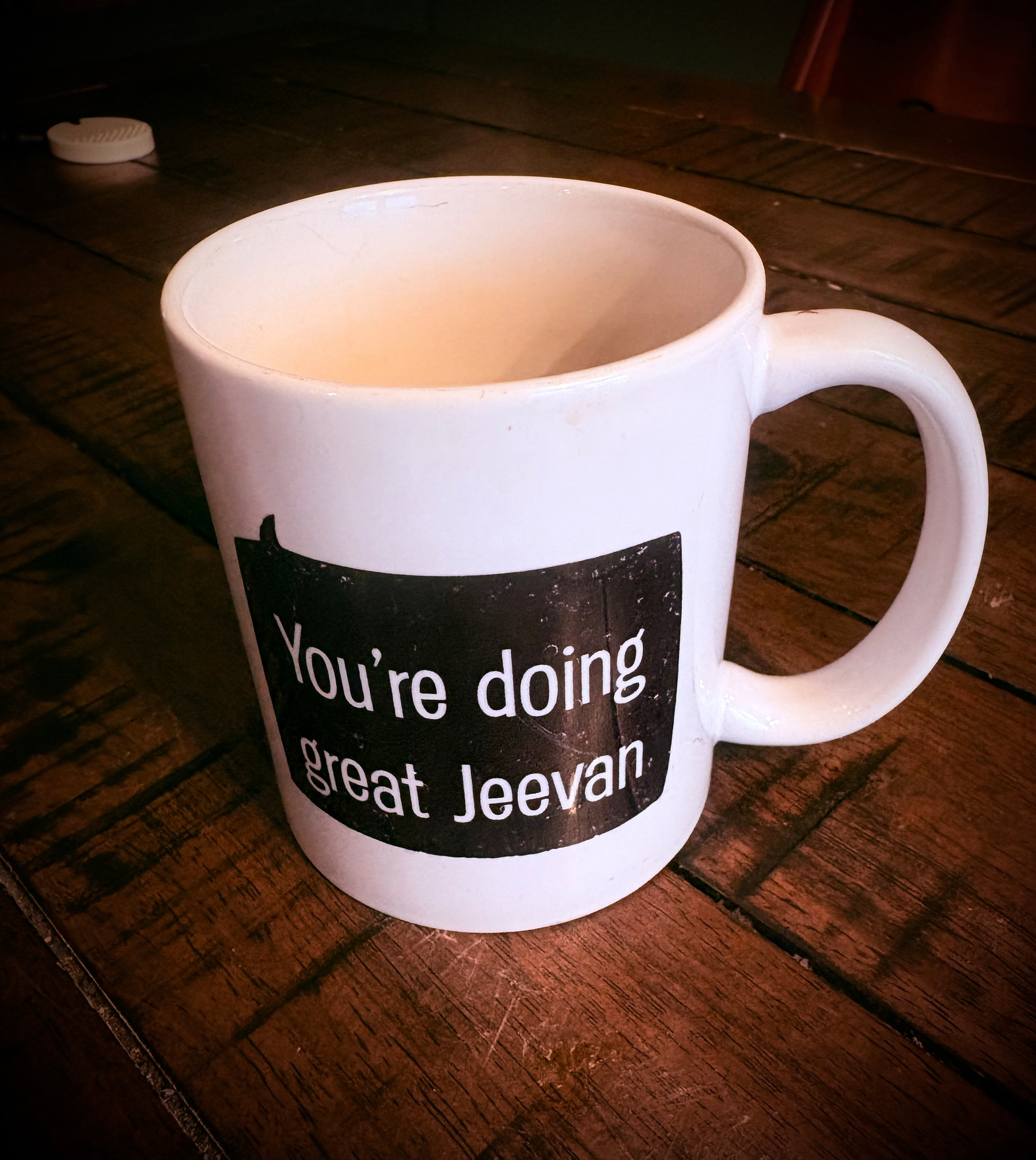
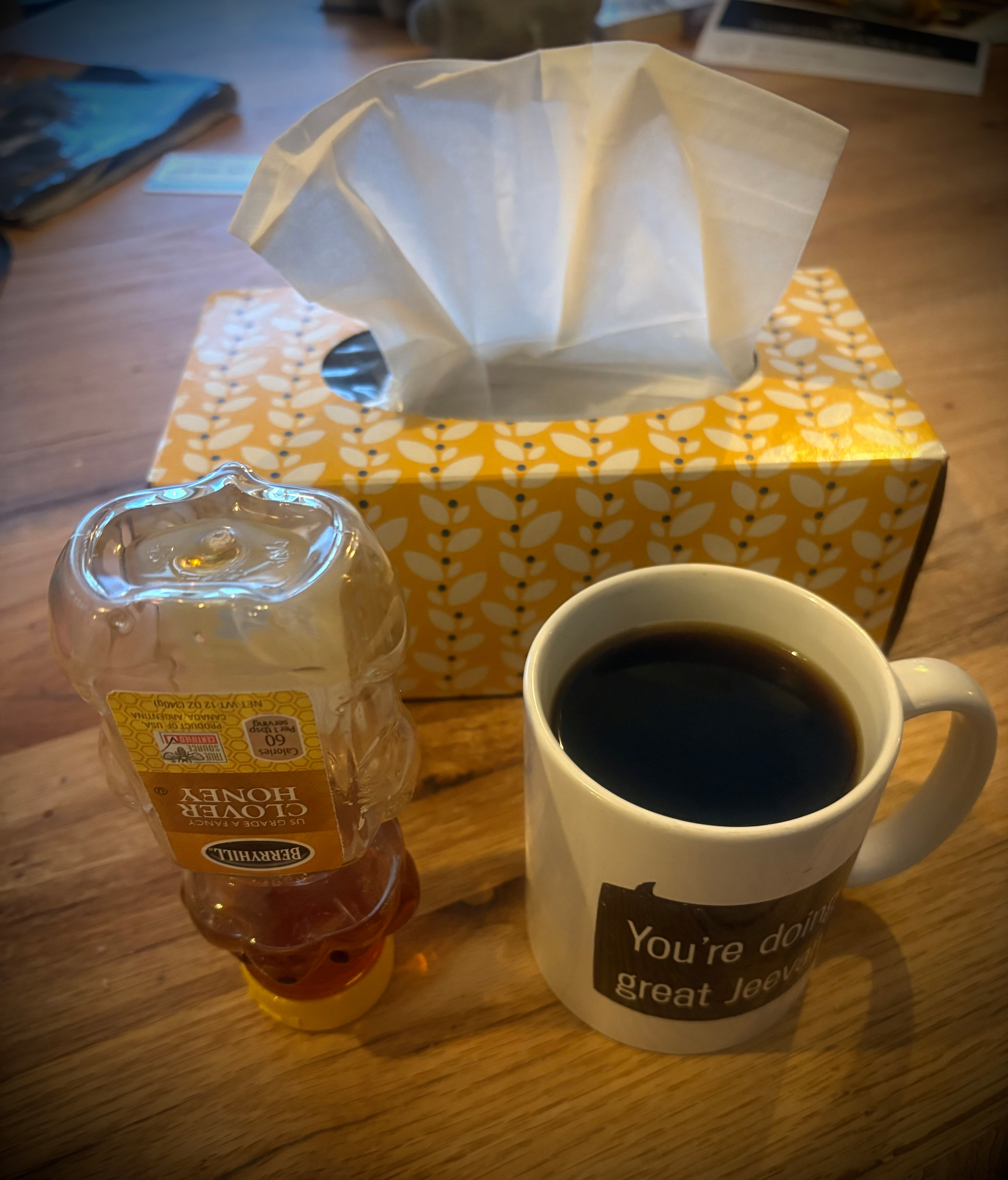
It is the morning of the fourth of February. I woke up early today and made my kids waffles for breakfast, which is something I would not normally have the time to do. I sat with them and drank coffee from a white mug with the words “You’re doing great, Jeevan” printed on it.

This is a reference to a scene from the HBO adaptation of the Novel Station 11, by Emily St. John Mandel.

In the scene, the male character Jeevan is trying to help a woman who is actively in labor, trying to deliver a baby. As Jeevan trying to talk to women through what’s happening, he gets freaked out and the woman who is struggling to give birth says to him, “You’re doing great Jeevan.”

When I watch this with my wife, we thought it was hysterical. Then we started saying it to each other moments. Loke when I was trying to run on a tree mill and my wife would ask if I was going to the store later, I’d say, “You’re doing great Jeevan.”

I don’t know if the humor of this will make sense to anybody reading this… but we thought it was funny.

I actually got the mug made as a gift for my wife.

My oldest son read the words on the mug and asked me what they meant. I tried to explain it, but I don’t think I was able to explain it in a way that his seven-year-old mind really understood.

More boredom please

From a post on Michael Easter’s 2% Substack.

We all know we spend too much time on our phones. There are thousands of articles offering tips on how to use your phone less. But these often miss an important point. When people reduce their phone screen time, they often get bored—and immediately replace it with another screen, short-circuiting the very mental state that drives creativity. Taking a couple of hours off your phone screen time only to add in more TV time is like replacing cigarettes with chewing tobacco.

Yeah!


Easter’s larger point is that, rather than telling ourselves we need to look at our phones less, we should try to increase the time we spend not being stimulated by a screen.

“Instead of less phone, more boredom,” he said in a different podcast/interview.

It’s a simple and obvious observation. One that is so simple and so obvious that people (myself included) don’t think it.

Watchful negligence

I read this in a New Yorker profile of Tim Berners-Lee, the man who is credited with inventing the word wide web: [Tim’s mother] Mary, a believer in “watchful negligence,” would let him and his three younger siblings wrap themselves in extra perforated tape.

I now really like the term “watchful negligence”!

I also really like how the author of the profile put that term in quotation marks. A great small editorial choice.


P.S. This is a post from one of my old blogs that I’m moving over to From78.

Hello Daystar 002

Hello Daystar,

I’ve been thinking about how I’d like to use the From78 site/blog. One possibility is to use it as a space to record different thoughts, feelings, moods, associations, vibes, hunches, and all the other stuff that makes up my headnoise at the start of a day.

Here are some loose suggestions (to myself) for how to make it happen.

  • Don’t overthink it
  • Keep it short
  • Aim to do it daily, but if I miss a day, don’t worry about it

Today: It is the first day in more than a week that I have not woken up feeling sick. It is marvelous. Be that as it may, I don’t feel like I’ve returned to what I’d call “baseline.” While I don’t feel sick, I feel like I’ve been sick and am still recovering from having been sick.

I wanted to exercise, but I decided to hold off because I’m worried I’ll overdo it. What I want is to return to baseline, so I can start training and get more benefit from it than I will if I start before I’m ready… which would actually set me back.

I’m also looking at how many podcasts, RSS feeds, and newsletters I subscribe to, and honestly asking myself how many of them I actually read, rather than skim. Some things need to be cut.

ACI - Authoritarian Consolidation Index

Discovered via E-FLUX Review 220

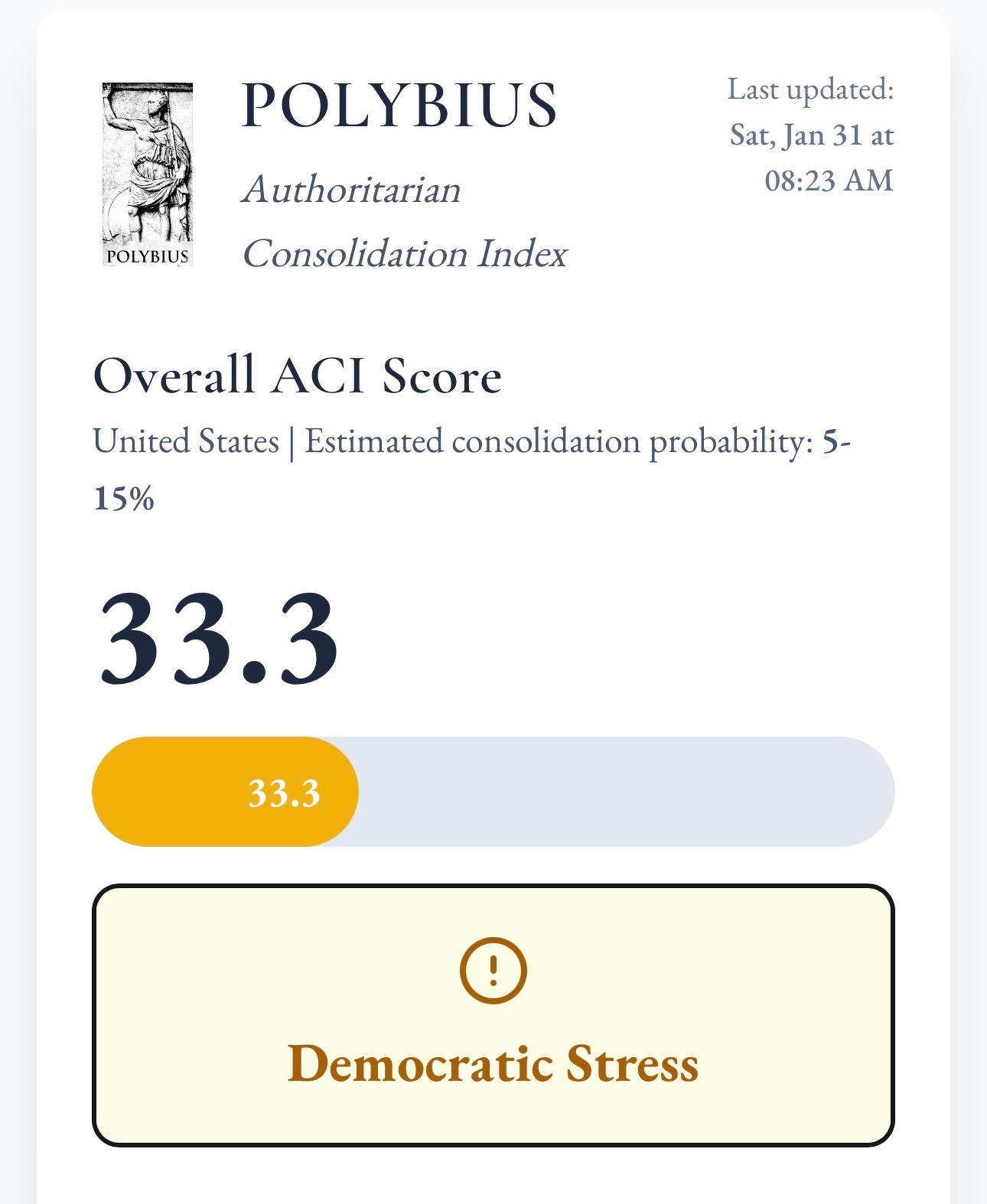
Polybius: The Authoritarian Consolidation Index (John Ganz) — An interactive poli-sci app that uses Claude to evaluate recent news against theoretical models like Linz’s “Perils of Presidentialism”, Gramsci’s hegemony, and de Tocqueville’s civil society to compute a score that measures the health of a given democracy. The app is pre-loaded with the USA’s “authoritarian consolidation index” score, but with your own API keys, you can run the analysis on any country of interest.

Here is the score when I checked today (31st of January, 2026). If you click the link, you’ll get a lot more information.

There is cold then there is cold

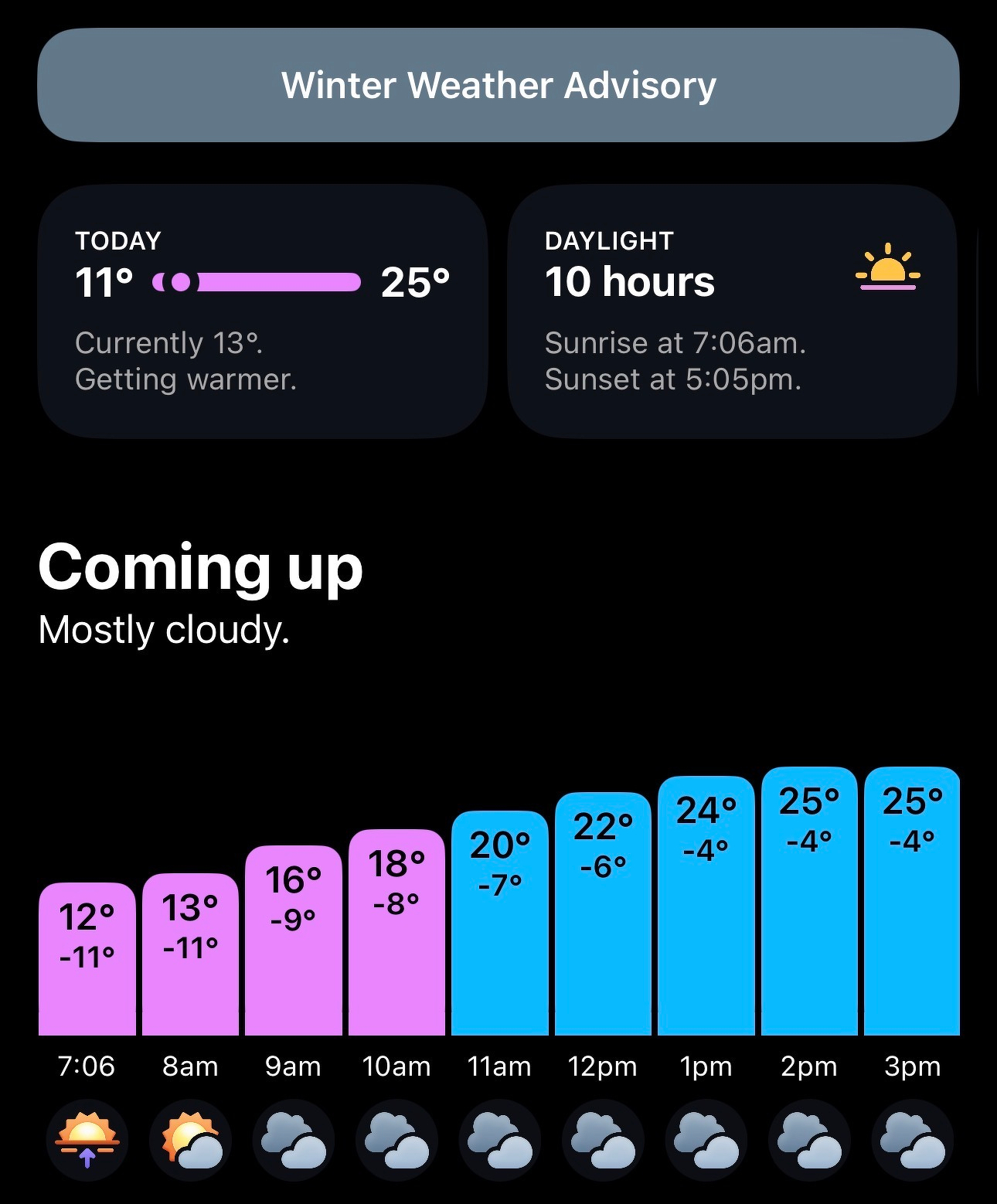
It has been brutally cold for a week. Going outside, even for a short time, has been very uncomfortable. (The cold air literally hurts any exposed skin, and breathing the air makes the inside of my nose feel that kind of burn that ironically comes from contact with something very cold.)

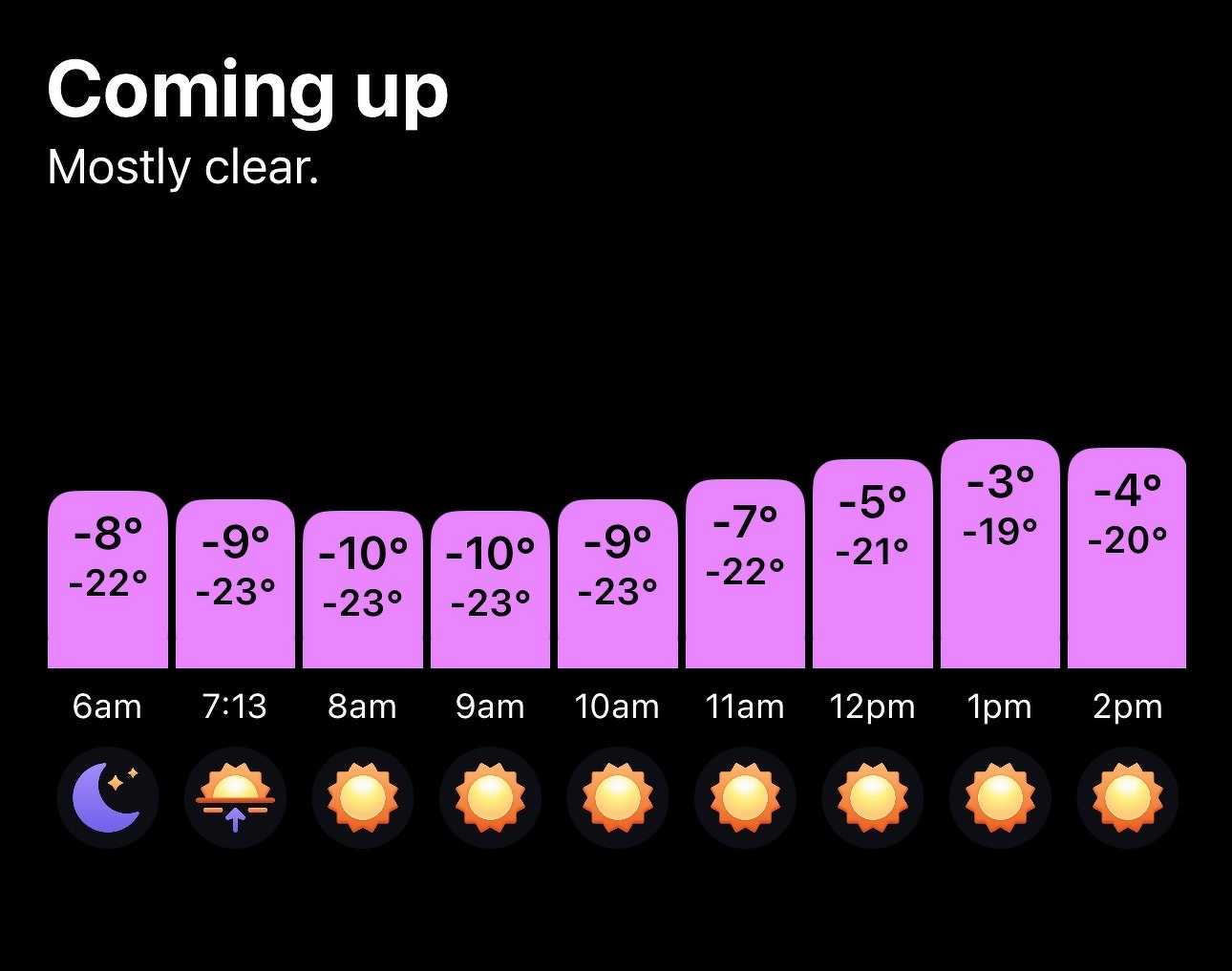
This is what a typical day has looked like for the past week. (For context: the larger number at the top of each bar represents the temperature in Fahrenheit and the smaller number beneath it represents the temperature in Celsius.)

Today, I see the temp is going to get up to 25 degrees Fahrenheit / -4 degrees Celsius, and I’m thinking to myself, “Things are warming up!

The idea that my body will experience these temperatures as warm is absurd. Yet, it is also true. Wow.

Cold & flu season

BeforeI had kids, I would get annoyed at how people with kids reacted to cold and flu season.

Simply put: I thought they were treating a time of year when many people had to deal with an inconvenient transitory illness like a bigger deal than it was.

Today, I’ve got four kids, the oldest is close to seven and the youngest not much over one year old. And everyone in the house has a cold.

Not COVID, RSV, strep, or the flu. Just a cold.

Having a cold makes everything even the most mundane task of daily life (sleeping, moving, talking, etc.) go from things that I don’t need to think about to things that require noticeable mental and physical effort.

When it was just me who had to endure this rottenness, it was uncomfortable, but it was definitely bearable. This is probably why I thought that people with kids were overreacting to cold flu season before I had kids. I was was assuming that my subjective experience of discomfort and difficulties that are part of being sick were representative of what they would be going through.

Now, as I experience having to deal with

  1. my own sickness induced discomfort and
  2. how my kid’s sickness induced discomfort (which makes them act in ways that are not fun)

I realize how sawfly cold and flu season is for people with kids! Having to manage the discomfort of others makes my discomfort become far more uncomfortable.

It also makes me more aware of something I talk about in my podcast —how getting older (and more experienced) has made me far less judgmental than when I was young (and less experienced).

Living in the Jackpot

Via Manton Reece (@manton)

Moltbook — a social network for AI agents to have discussions with one another. This is wild. I often joke about “our future AI overlords” but this might’ve just crossed a line into actual concern… We are putting a lot of trust into these new bots. 🦞

OMG!

My immediate first ass association is to the concept of “the jackpot” from the recent William Gibson novels.

For those who may not be familiar with the “jackpot” as a term/concept:

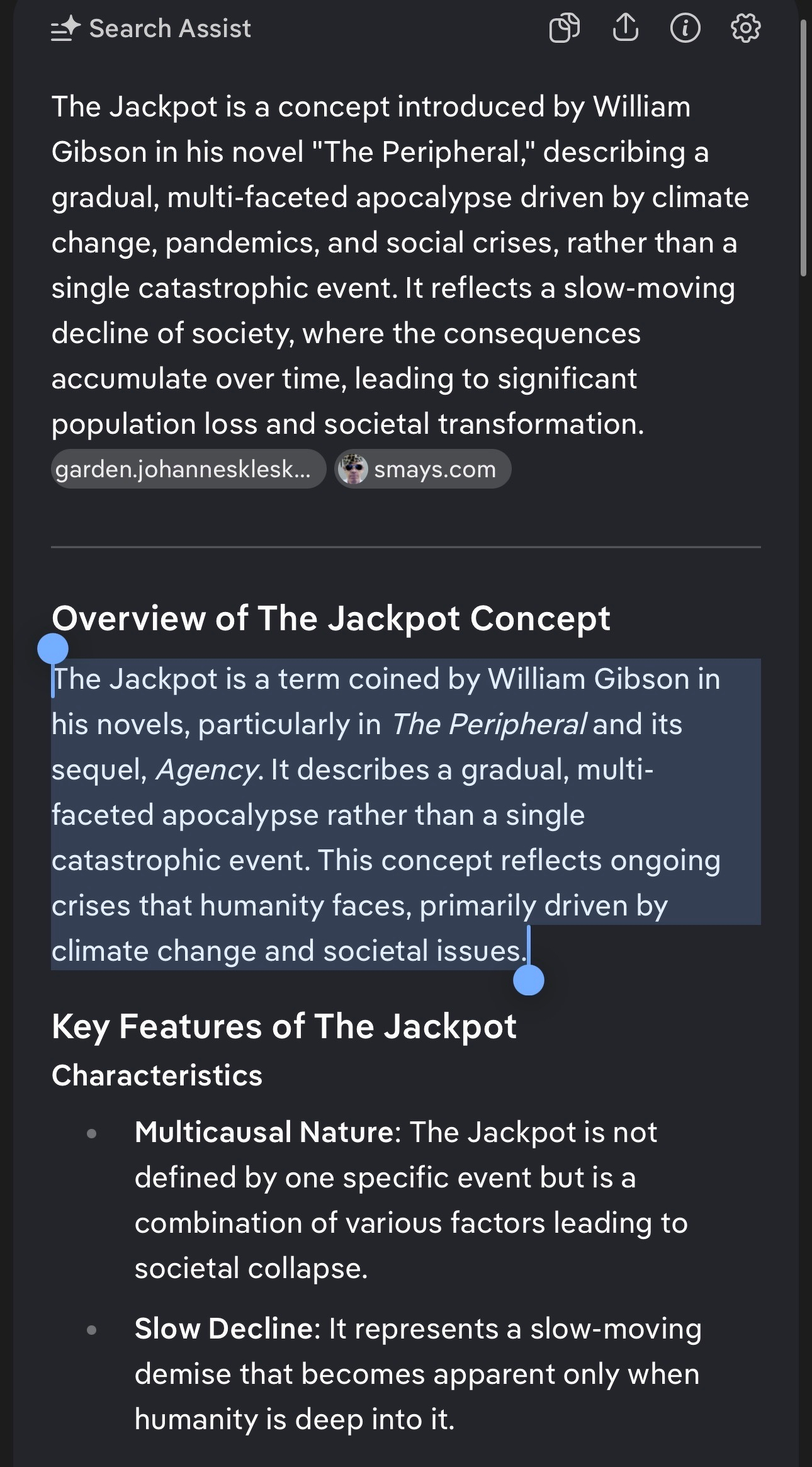
The Jackpot is a term coined by William Gibson in his novels, particularly in The Peripheral and its sequel, Agency. It describes a gradual, multi-faceted apocalypse rather than a single catastrophic event. This concept reflects ongoing crises that humanity faces, primarily driven by climate change and societal issues.

Ironically, the quoted text above came from the AI generated summery when I searched for the term via DuckDuckGo.

Time slips through your fingers like an eel

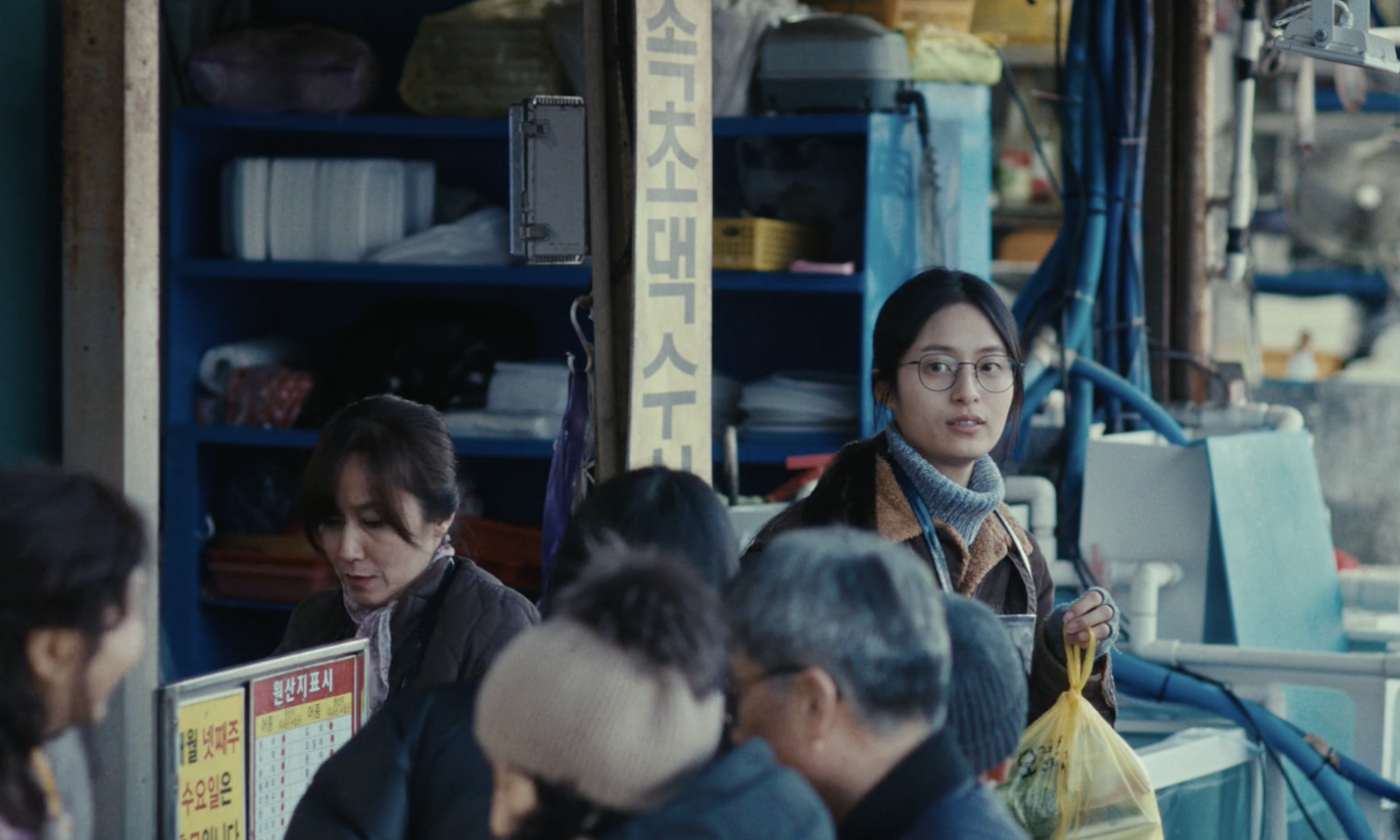
From the film Winter in Sokcho (2024) on Mubi.

Time is so cruel. It slips through your fingers like an eel.

Yeah!

When I read these words on the screen while watching the film (with English subtitles), I paused the movie to contemplate what they conveyed.

My reverie brought up thoughts about how, nowadays, I sometimes consider starting something and decide not to because I know I won’t have time to see it through to the end.

(Recent example: Starting a long book, trying to learn a new language, & cleaning out the storage room in my basement.)

I don’t think this happened to me when I was younger, or if it did, it didn’t happen as often as it does now. The reason for this: when I was young, I could honestly tell myself I had a lot more free time and a lot more tomorrows… Saying “I’ll do X later” or “I’ll get to X tomorrow” wasn’t necessarily a lie.

Now, experience has taught me that whenever I think I’ll get to something later or tomorrow, I quickly realize that’s probably not true. I recognize that sentiment as an appealing fiction, but a fiction nonetheless. I’ve come to really experience, acknowledge, and know that time slips through my fingers like an eel.

Micro.blog feels like 2005-2010

I’ve been using and exploring micro.blog for a few weeks now.

Verdict: It’s a product/service that I enjoy using a lot!

Today, I was thinking about what makes me love using it so much. I came up with several things, but the most notable was that using it feels the way it felt to use the internet around 2005-2010, which was such a fun time for me.

I’m going to keep thinking about this.

Lacan’s system.

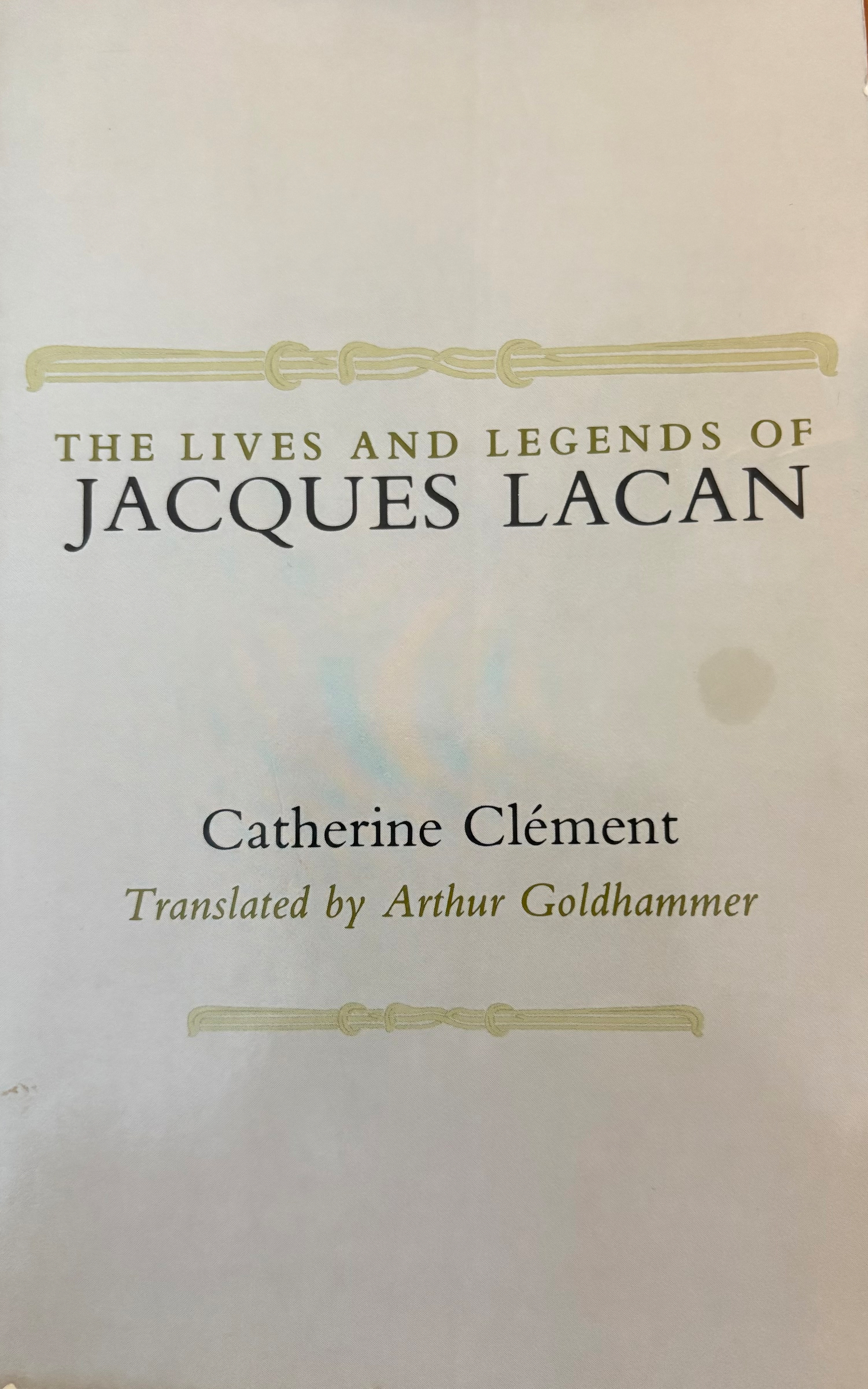
From The Lives and Legends of Jacques Lacan, by Catherine Clément

About love nobody ever spoke better than Lacan […] Love was a permanent presence, ever so lightly touched upon as he - lingered lazily, lengthily over the dead ends of desire, the desperations of fantasy, and the impossibility of “sexual intercourse.” In Lacan’s system, which is less inflexible and less fully worked out than some people think, love will no doubt remain one of the few escapes, perhaps the only one. Love was a door which, unlike the others, was not closed. A door left ajar. (p. 21)

There are several interesting things in this.

  1. Lacan’s system is less inflexible and not fully worked out.
  2. The importance of love as an act, as a creative act within Lacan’s thought.

From The Kohut Seminar: On Sslf Psychology and Psychotherapy with Adolescents and Yoong Adults.

Coleridge spoke of “the willing suspension of disbelief,” there is also a necessity for the willing suspension of disbelief when you listen to a particular mode in which a topic is presented to you. I do not suggest the willing suspension of disbelief forever; I suggest only a suspension of disbelief until you have grasped what the other person has to offer. In other words, one does not object before one has first heard the other person out to some extent. (p. 4)

Yeah. Very well said .